“The best teams today aren’t always sitting in the same office—they’re scattered across time zones, delivering value on-demand.” — Jane Liu, COO at a Global SaaS Startup
The New Hiring Dilemma
Businesses today face a big question: do we hire full-time employees or tap into the growing freelance economy? With the rise of platforms like Zikabrims, the way we source talent has shifted from local-only hiring to global, flexible, and cost-efficient teams.
Let’s break down the numbers and real-world insights.
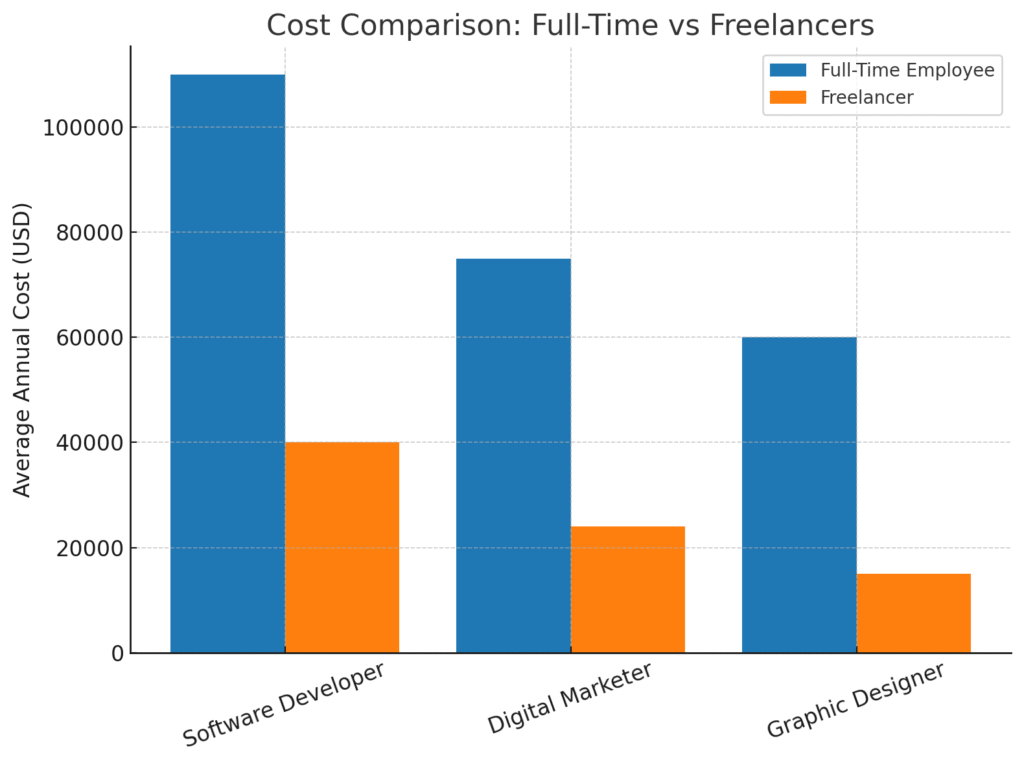
Cost Comparison (Per Year, Average)
📊 Sample chart idea:
| Role | Full-Time Hire (US/Europe) | Global Freelancer (via Zikabrims) |
|---|---|---|
| Software Developer | $95,000 – $120,000 (salary + benefits) | $30,000 – $50,000 (project-based) |
| Digital Marketer | $70,000 – $85,000 | $18,000 – $30,000 |
| Graphic Designer | $55,000 – $65,000 | $10,000 – $20,000 |
💡 Insight: Freelancers cut fixed costs by 40–70%, giving businesses room to scale smarter.
Flexibility = Agility
Full-time hire:
- Locked into salary & benefits
- Great for long-term, repetitive tasks
Freelancer:
- Pay for skills only when you need them
- Quick access to specialized expertise
- Scale up or down instantly
“Freelancers gave us the agility to launch campaigns in three countries in two weeks. A full-time team would have taken months.” — Michael Adams, Marketing Director at a FinTech firm
Risk & Commitment
- Full-time employees = stability, culture building
- Freelancers = less commitment, but require strong project management
📈 Suggested infographic idea: A scale illustration showing:
- Security & loyalty tilting toward employees
- Speed & cost savings tilting toward freelancers
So, Which Wins?
The truth is: it depends on your growth stage and goals.
- Startups & SMEs: Freelancers give flexibility + lower burn rate
- Large corporations: Employees ensure long-term alignment
- Hybrid models: The fastest-growing trend — combining stable in-house teams with on-demand freelance experts
Hiring isn’t a one-size-fits-all game anymore. In today’s economy, the smartest businesses blend both models — creating resilient teams that scale without burning budgets.
Leave your comment